My Favorite Matcha in London (And Why That’s More Complicated Than It Sounds)
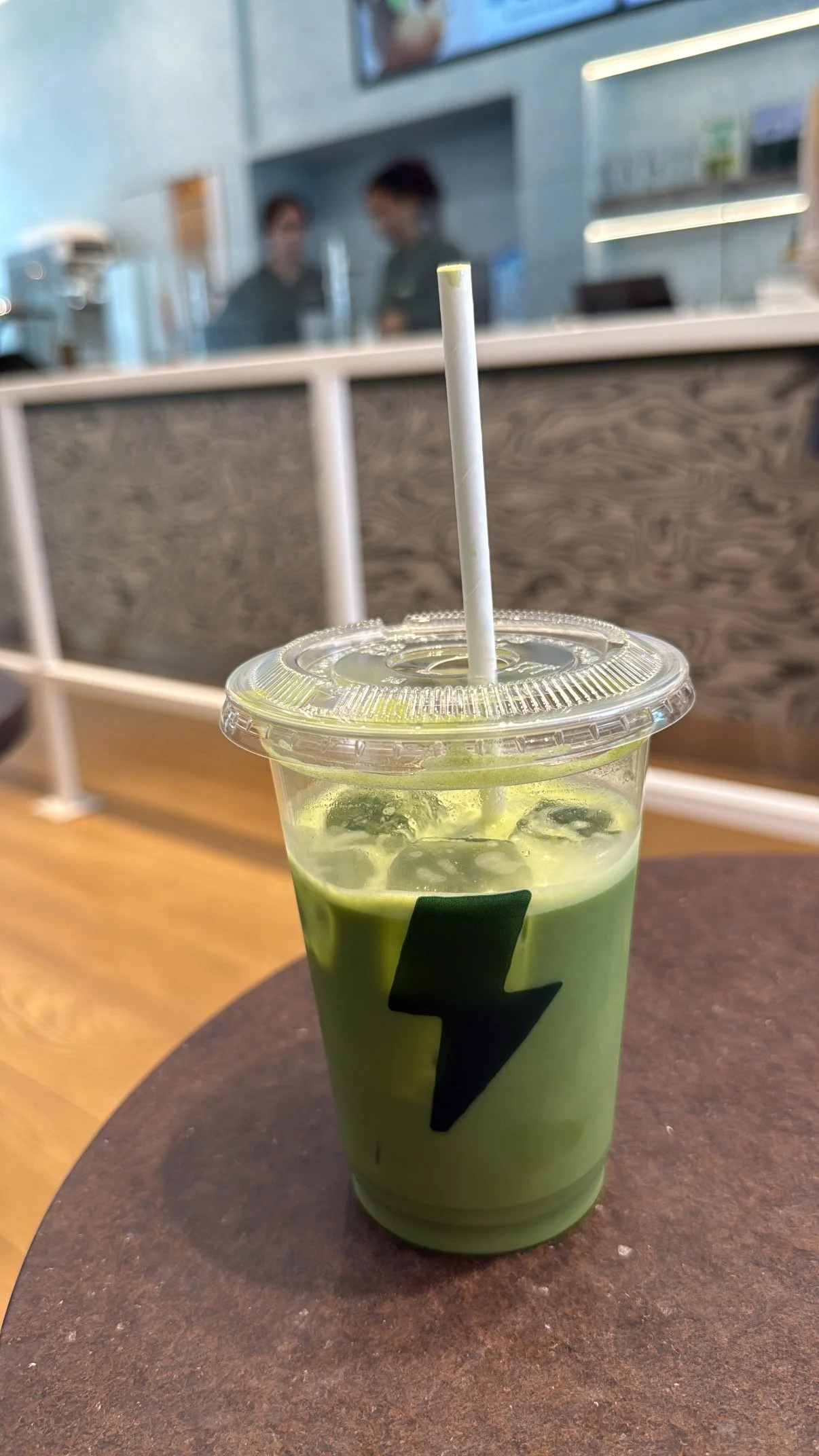
The matcha I posted, my first food or drink after a long overnight flight.
I posted an Instagram story of my drink at Jenki. Nothing fancy. Just a quick snapshot and a caption I wrote: “Best matcha in London.” I meant favorite. Jetlag.
“Oh girl no. Hard no.” I saw it on my lock screen as I was heading for dinner at Som Saa, my first dinner every time I come to London. A Thai place with an incredible whole seabass that reminds me of being in Northern Vietnam with my husband, when our guides took us to roadside restaurants that were basically concrete slabs and very cheap but extraordinary food. It’s a ritual. Everything about my first 24 hours in London is a ritual, and Som Saa is one of them. I even have a favorite table. The staff has memorialized it in my profile so I’m always sat there.
I was confused at first. Then a little irritated. I’d been matcha shamed. For my simple joy. She didn’t know that in most cities I can’t get matcha at all. In Lisbon, there was only one place that made matcha with almond milk. It wasn’t a great matcha. But at least I could drink it.
That’s the bar. Not the best matcha. The one I can actually drink.
I go to London frequently for work. When I’m here, it’s a work trip. Any free time I have is largely focused on getting my body ready to facilitate a workshop or an offsite or a conversation with a group of leaders. I have rituals: eating fish for the first 24 to 48 hours, going to Som Saa, staying on the east side of the city near Liverpool Street, and matcha. It helps ease my jet lag and gives my body something it’s used to. It feels like home, which calms my nervous system. I like this part of London because it’s close to clients, close to the station, and lets me move quickly without navigating tourist crowds. It’s also close to Spitalfields, which has restaurants, a little shopping, and Jenki.
Jenki is my matcha spot because I know I can get a solid matcha there, and most importantly, they have almond milk. This is critical. Not dairy, not coconut, not oat, not soy, not hazelnut. Almond milk. It’s the only milk I can drink, literally. It’s not that I have preferences or opinions about milk. It’s that almond milk is literally the only milk that my body will tolerate.
The list of things I can and can’t eat is long, and the rules are complicated even to me sometimes. I have multiple chronic illnesses including fibromyalgia and myalgic encephalomyelitis, or M.E., which most people know as chronic fatigue syndrome. People with M.E. are often bedbound or wheelchair bound. I’m one of the lucky ones with a mild enough case that I can work full-time and travel, though it takes significant effort to even be able to do this. I also have a whole host of food allergies. Every choice I make while traveling is deliberate and body-driven. The matcha, the hotel location, the dinner. Nothing is overlooked. Nearly every element of my trip is intentional.
Every choice is load-bearing when you’re traveling with a body that has real constraints.
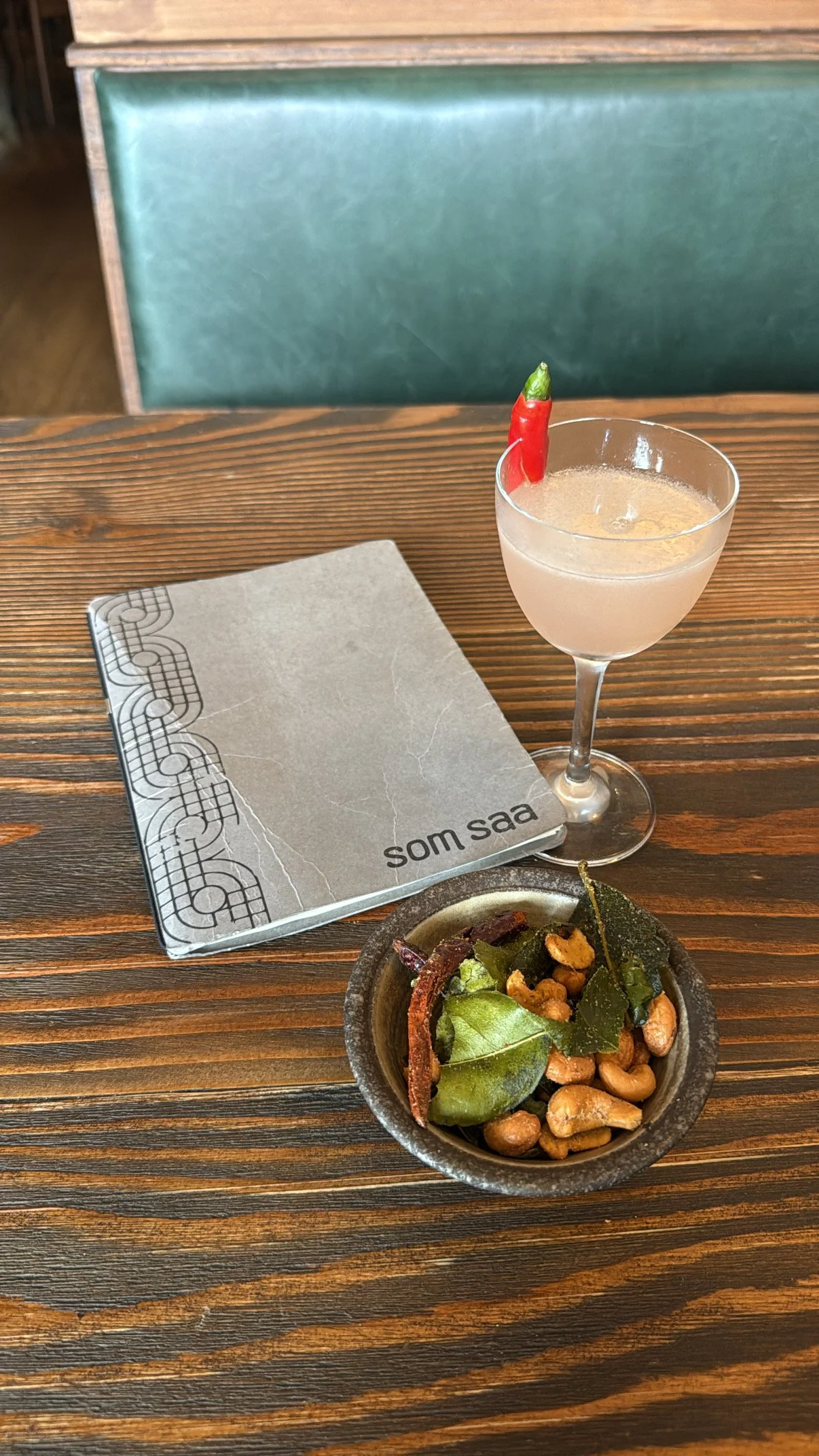
The beginning of my delightful dinner at Som Saa
After the hard no came a stream of recommendations. Beautiful places, many Japanese-owned or themed, which makes sense since that’s where matcha originates. I’m sure the matcha was delightful. I scrolled through them while waiting for my Sea Bass at Som Saa.
I could not go to a single one of them.
Almost all were a half hour out of my way, in areas I don’t go to, with no easy transport from where I am. Not on my way to anything. Not close to me. And not one of them had almond milk. Not one.
I checked all of them, spending a half hour googling to find their sites or more details squinting at far away pictures of their menus just to be sure. The most promising one that was only a 15 minute walk out of my way had dairy, coconut, hazelnut, and oat. No almond milk. The amount of time I’ve (not to mention my sweet husband) spent looking for matcha places that have almond milk is tremendous. A massive time sink.
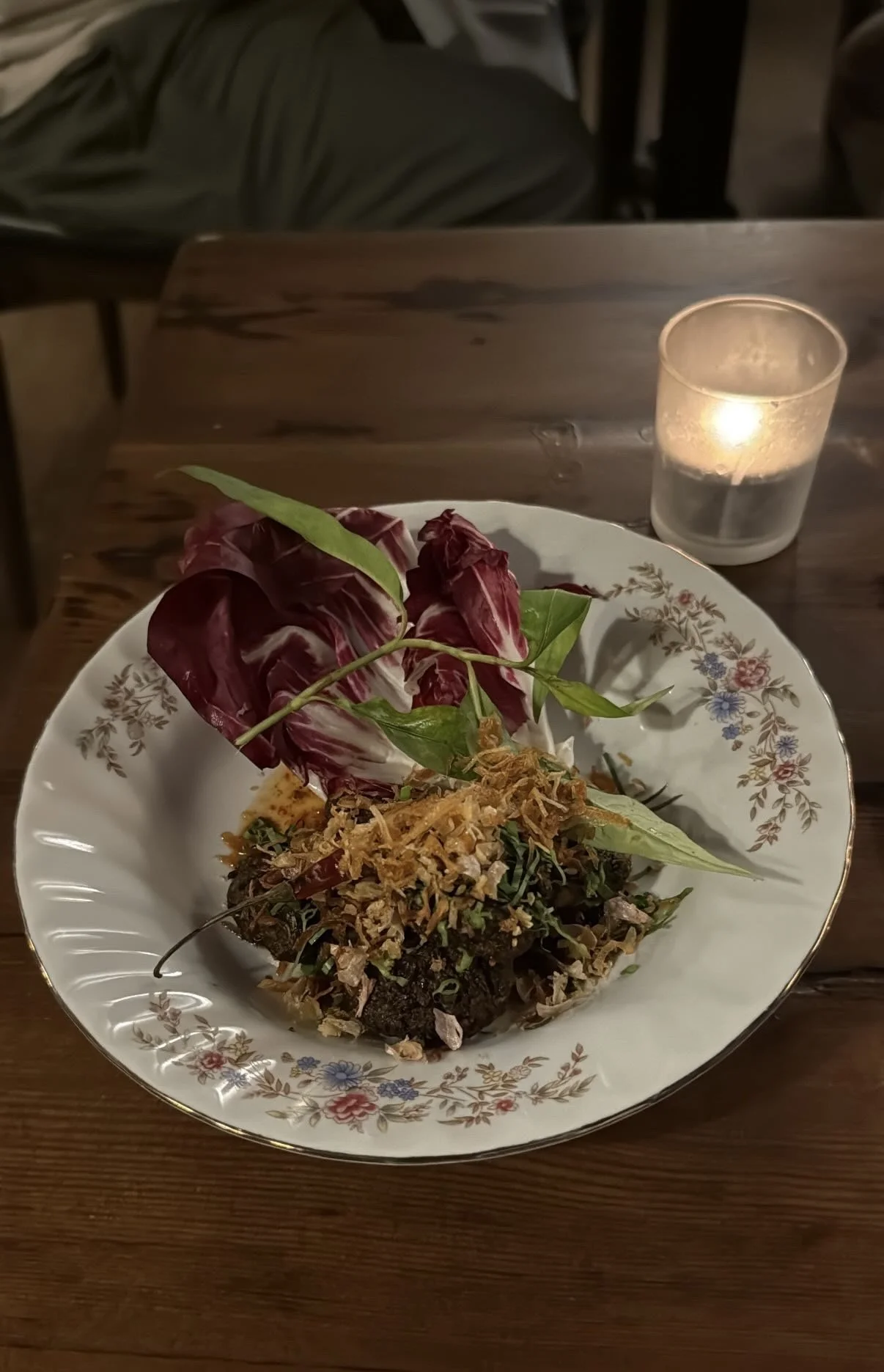
This chicken laab was so tasty.
Here’s what able-bodied people without food allergies don’t always understand: matcha isn’t just a preference for me. It’s one of the only caffeine sources I can have. I can’t drink coffee, even decaf. I can’t drink black tea. I can only have green tea or white tea. Matcha works because the caffeine disperses differently. It doesn’t hit my system the same way.
My husband has learned to search for both when we arrive somewhere new, because he knows that combination is the only thing that’s really going to work. Regular green tea is technically an option, but it’s not the same. Green tea can still spike my nervous system. Matcha delivers caffeine differently, slower, steadier. It’s not just that I need matcha. It’s that I need matcha with almond milk. That matters when your body is already working hard just to be there.
Part of managing M.E. means managing something called post-exertional malaise. It means that activity, even small amounts, can trigger a crash. Long walks without breaks, long days, even brief bursts of exertion. Once I did four minutes of mildly aerobic activity and was in bed for the next two days. A 40 minute detour doesn’t just cost me 40 minutes. It can cost me the next day of work.
So when someone suggests I take a 40 minute detour for a better matcha, they’re not just suggesting a different coffee shop. They’re suggesting I give up the one thing that works, at a place I can actually get to, with a milk I can actually drink. And that detour could wipe out my energy reserves for the rest of the day. For most people, grabbing a drink while traveling is an afterthought. For me, it’s a calculation. Every single thing I put in my body has consequence and is carefully thought through. Get the wrong milk and I’m spending the evening in the bathroom. Get the wrong food and I can’t move.
I was reminded of this while waiting for my drink at Jenki. The barista set down two drinks that looked exactly the same and walked away. A couple came up and started second-guessing which one was dairy. I said, she said this one was dairy, but you might want to check. They did. He came back and said “You were right, it was dairy. Thank you so much, because I literally could have died if I drank that.” It was actually a really beautiful moment. I said, “Us people who have milk issues have to stick together.” And he said, “Yes!” It was a pretty beautiful travel moment.
In London, the few places I found matcha with almond milk were pretty horrible. They’d say yes we have matcha and then pull out the dreaded squeezy bottle of pre-made. Yuck. Jenki is the only place I’ve found that is accessible, has a solid enough matcha, and has almond milk.
It’s also a little sentimental. When I first started coming to London regularly in 2021, Jenki had just opened. After trying so many horrible matchas, I was relieved to have a place that was reliable. They also have a ginger turmeric drink that I adore. It’s deeply soothing on my stomach, which after a long travel day is exactly what I need.
If you have a body that lets you drink oat milk or take a 40 minute detour, these all look lovely: Tokkia, Moko Made, Frothee, Jujuhome Cha.
And if you want to offer me (or anyone with chronic health conditions) a suggestion, please don’t start by shaming my choice but do ask if I have any food allergies or limitations.